
 Login »
From prototype to production
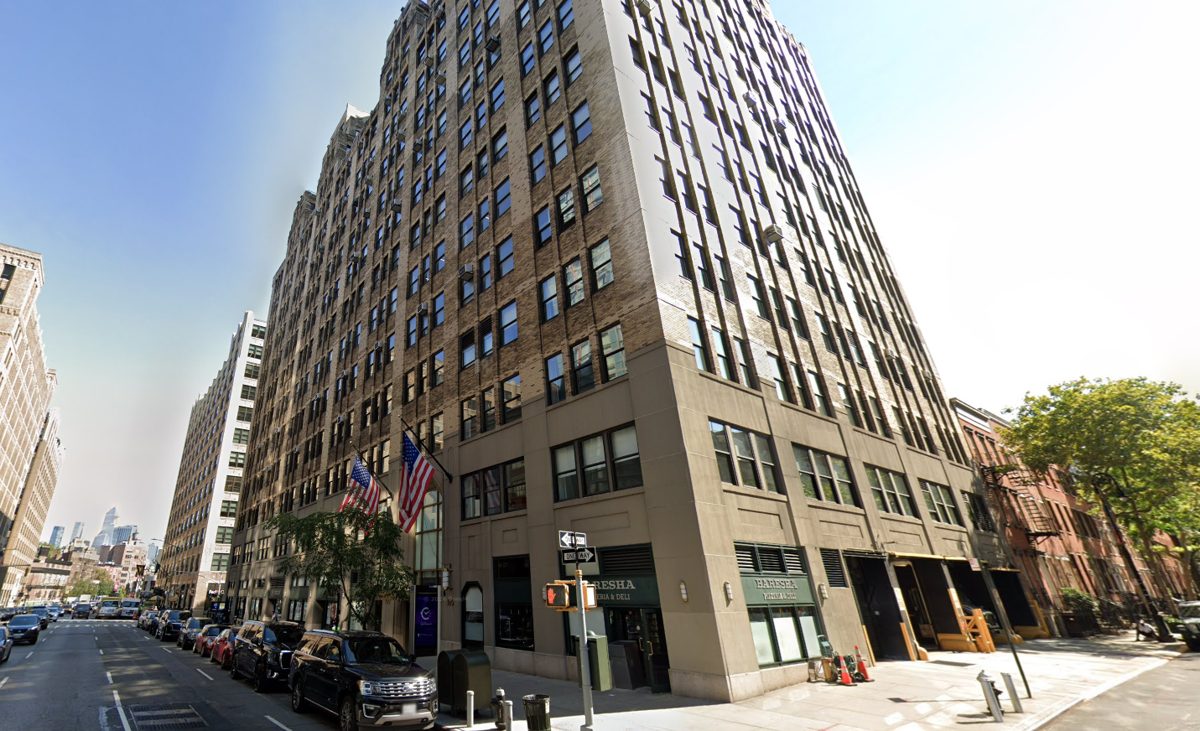
The system was prototyped during 1942 on the 12th floor of the Graybar-Varick building on Varick Street in New York, with manufacturing done by Western Electric at their factory on Hudson Street, New York.
In November 1942 it was tested over transatlantic radio to allow for fine tuning and improvements. By this time the prototype had gained the nickname Green Hornet, after a popular radio show of the time, because of the buzzing sound that would be heard by anyone eavesdropping: the encrypted call resembled the show's theme tune. Incidentally, this same buzzing was also heard by exchange personnel who had to patch the lines.
Once individual parts for these Green Hornet systems had been completed and tested at Western Electric, they were sent to a former sound movie laboratory in the States, where they were assembled into complete systems. The first system was completed in early April 1943, and the second soon after. Now real tests could be carried out.
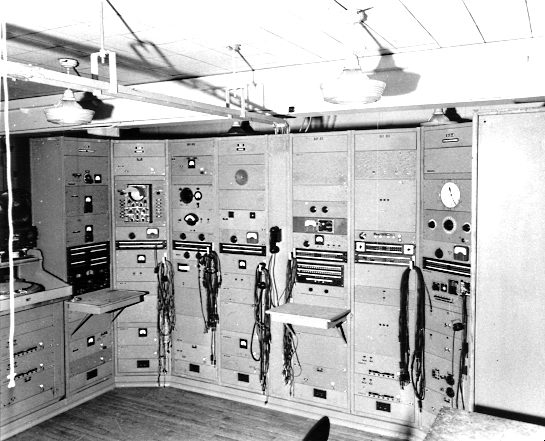
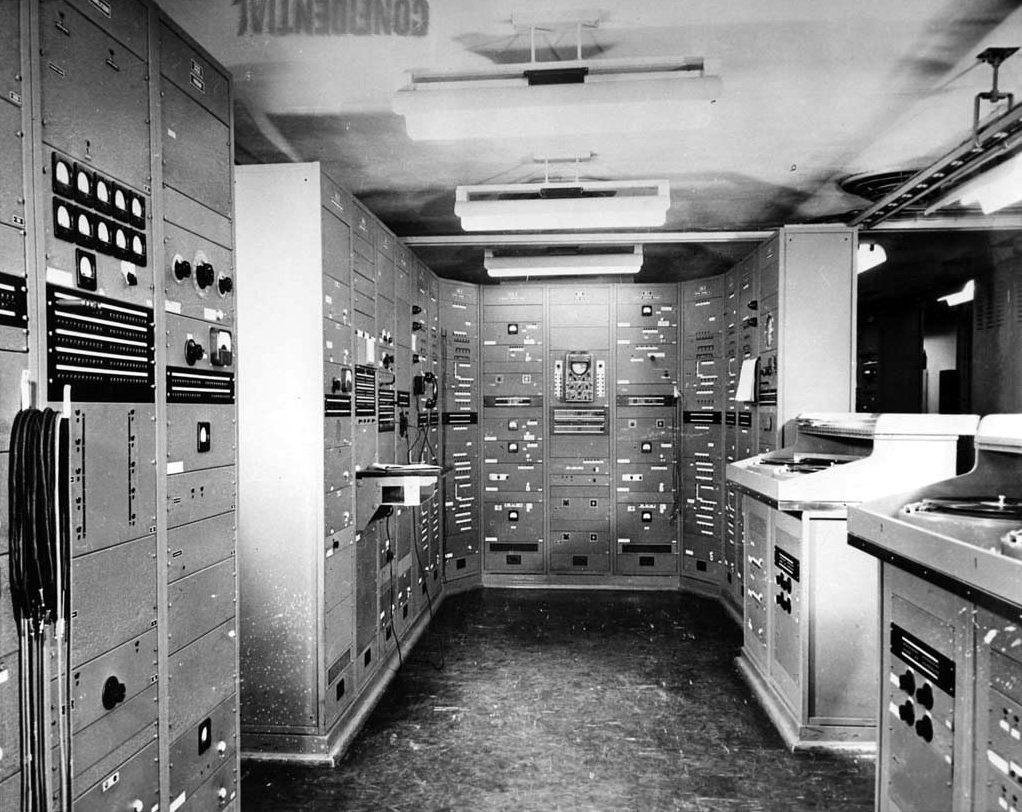
SIGSALY
With prototyping completed and mainstream production commencing, the project was officially named SIGSALY. Although this looks and sounds like an acronym, it was in actual fact just a randomly chosen name.
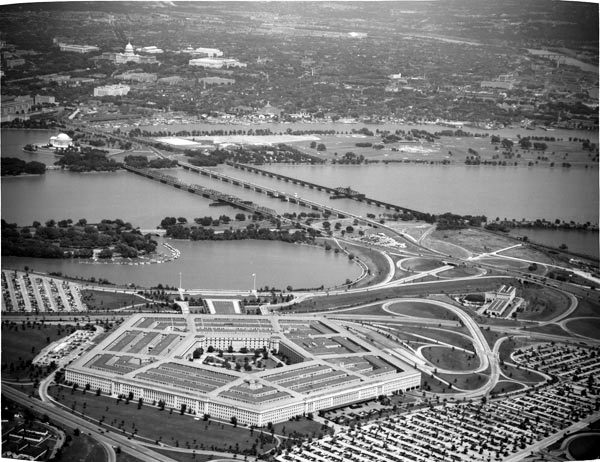
The first link to be installed was between the Pentagon and the HQ of the US Dept of Defence in April 1943.
The White House was considered, but the number of equipment racks needed meant there wasn't space.
The equipment consisted of over 30 racks, floor to ceiling height and 19 inches wide, weighing over 50,000kg, consuming 30kW of electricity and requiring special air conditioning. The cost of one terminal was $1 million in 1943 (that would be over $18 million today).
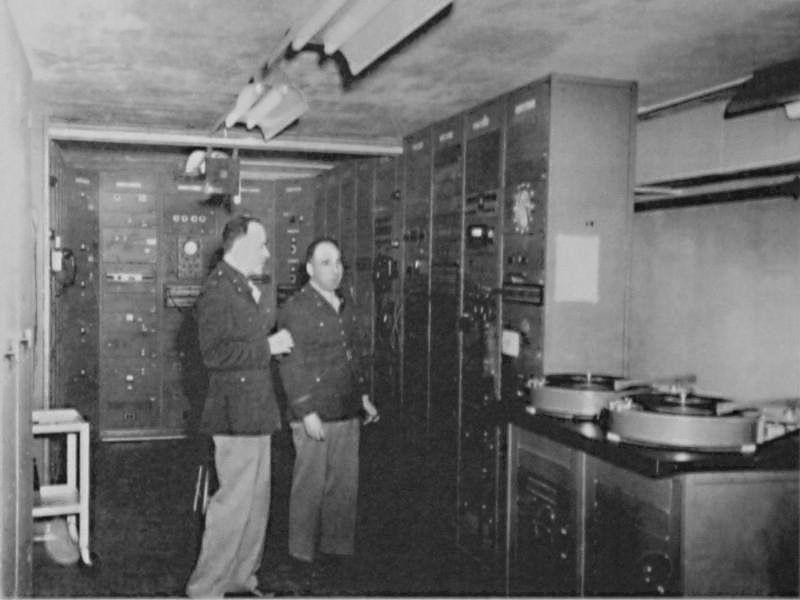
London: under Selfridges
The equipment was shipped to the UK in May 1943 by the converted Cunard passenger liner Queen Elizabeth. She was known as His Majesty's Transport Ship (HMT) Queen Elizabeth, as she had been converted into a troop transport ship along with her sister ship Queen Mary. The equipment was then installed by specially vetted members of the US Army Signal Corps in the basement of Selfridges department store on Oxford Street.
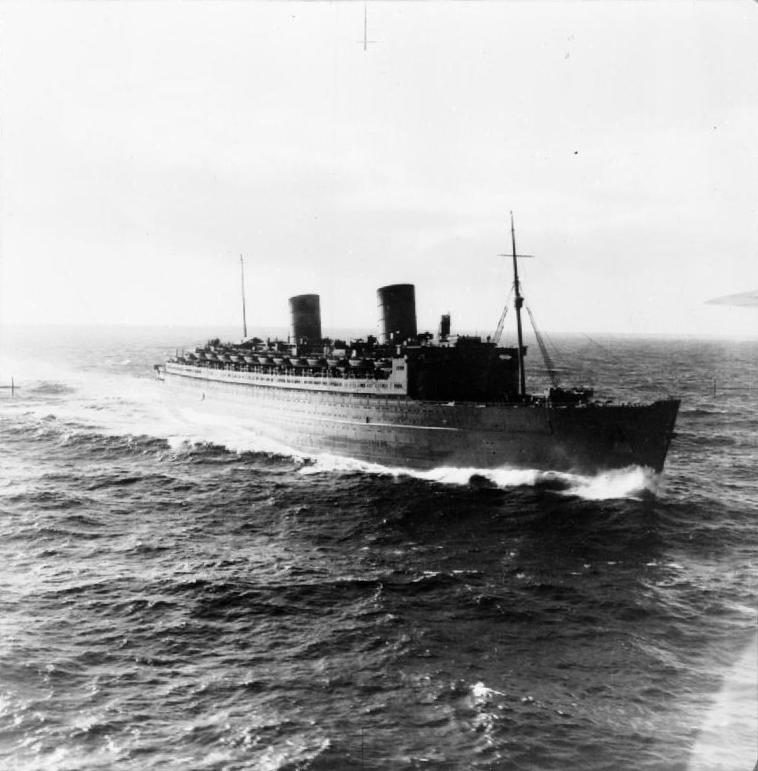
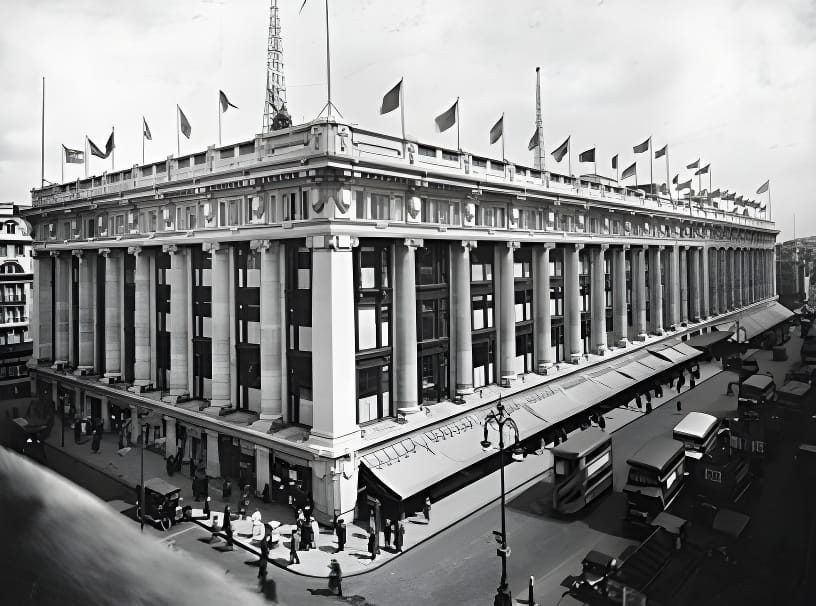
The first call using the equipment took place on 15 July 1943. Selfridges was about a mile from the Cabinet War Rooms, and was the only building nearby with sufficient space.
Initially, callers had to come to Selfridges to make a secure call to the USA. However, extension lines were later run to the US Embassy in Grosvenor Square, and to both the Cabinet War Rooms and 10 Downing Street.
In the US an extension line was also provided from the SIGSALY equipment in the Pentagon to the White House, and to the US Navy offices on Constitution Avenue. These extension lines were not standard phone lines, as they would easily have been tapped. A method known as OPEPS (Off Premises Extension Privacy System) was devised to secure them.
The cable was piped, with both ends of the pipe pressure-sealed and a gas pressure system used to maintain pressure within the pipe. If the pipe was broken the pressure would drop and an alarm would sound. Additional protection was provided by superimposing a noise signal on each wire of the line. As the phone wires were twisted together the two signals would cancel each other out and not be heard, but if either wire was tapped the signal on each wire would be unbalanced, which would cause a sound in the earpiece, indicating to the user that something was amiss. This ensured there was an immediate alarm to the users, who could put an end to their confidential call at once.
Around the world
The third SIGSALY installation was made in North Africa. Overall, 13 systems were installed around the world:
| Location | Country | Notes |
|---|---|---|
| Washington DC (Pentagon) | USA | First installation, April 1943 |
| London (Selfridges) | UK | July 1943 |
| Algiers | Algeria, North Africa | |
| Brisbane | Australia | |
| Fort Shafter | Hawaii, USA | |
| Washington State | USA | |
| Oakland, California | USA | |
| Paris | France | After liberation |
| Guam | USA | Ship-based installation |
| Frankfurt | Germany | Post-war |
| Berlin | Germany | Post-war |
| Tokyo | Japan | Post-war |
| Manila | Philippines | Post-war |
The longest call
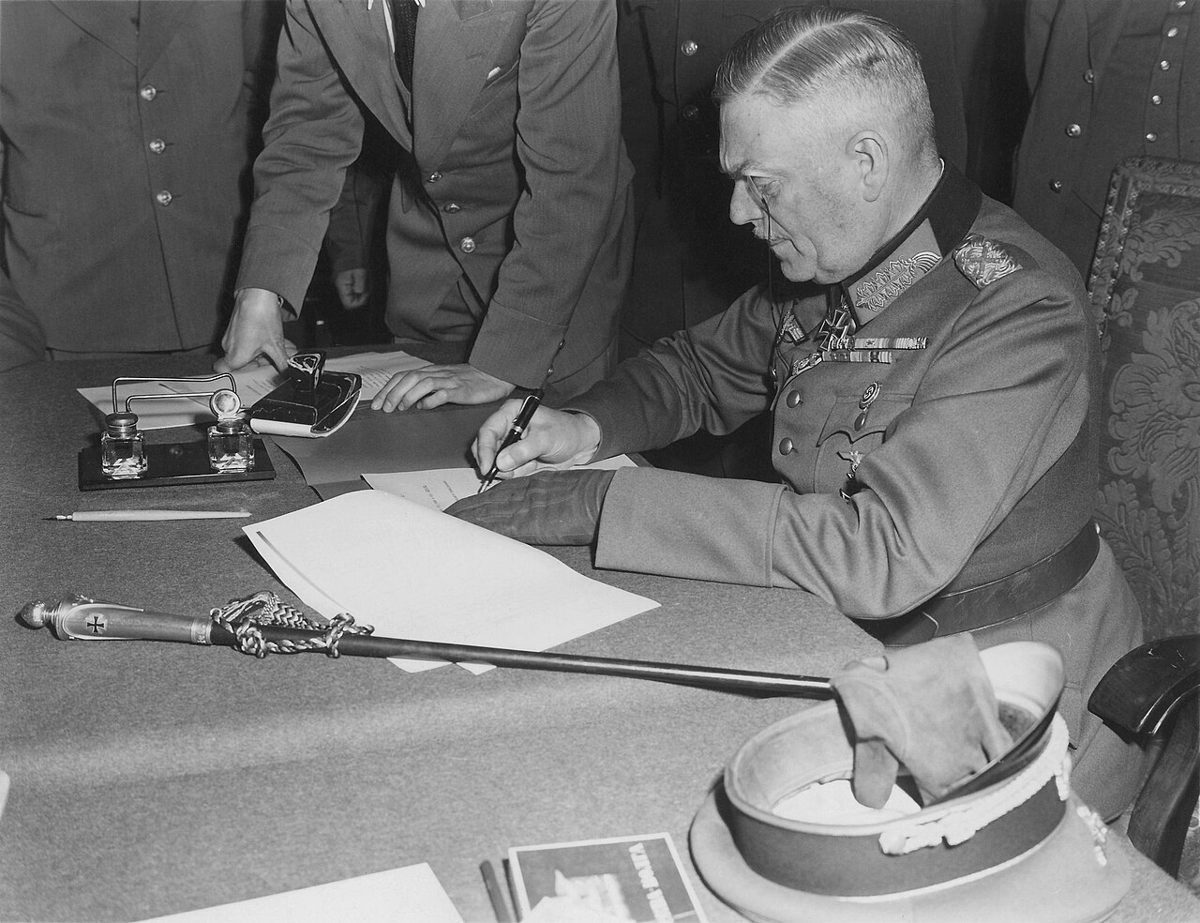
The system carried its longest call, lasting two hours, in May 1945, when Churchill and Truman discussed tentative German surrender offers. Although some of the systems remained in use a while longer, the London installation was decommissioned on 31 October 1945.
The system remained secret for another 30 years, not becoming public until 1976, when over 30 patents covering the technology, which had been applied for by Bell Labs between 1941 and 1945, were finally granted. This meant that they could now be publicly published by the US Patent Office.
The existence of SIGSALY was highly classified during the war, and its usage was limited to a small number of high-ranking officials. Even those who used it were often unaware of the technical details of the system.
Looking back, the complexity and detail of the system needed to fulfil this vital purpose was necessitated by the urgency of the situation. The term “necessity is the mother of invention” was never more ably demonstrated than here!