
 Login »
A vital link, and a weak one
At the outbreak of war it was clear that this link would be vital in co-ordinating Allied efforts, yet it was also a serious security vulnerability.
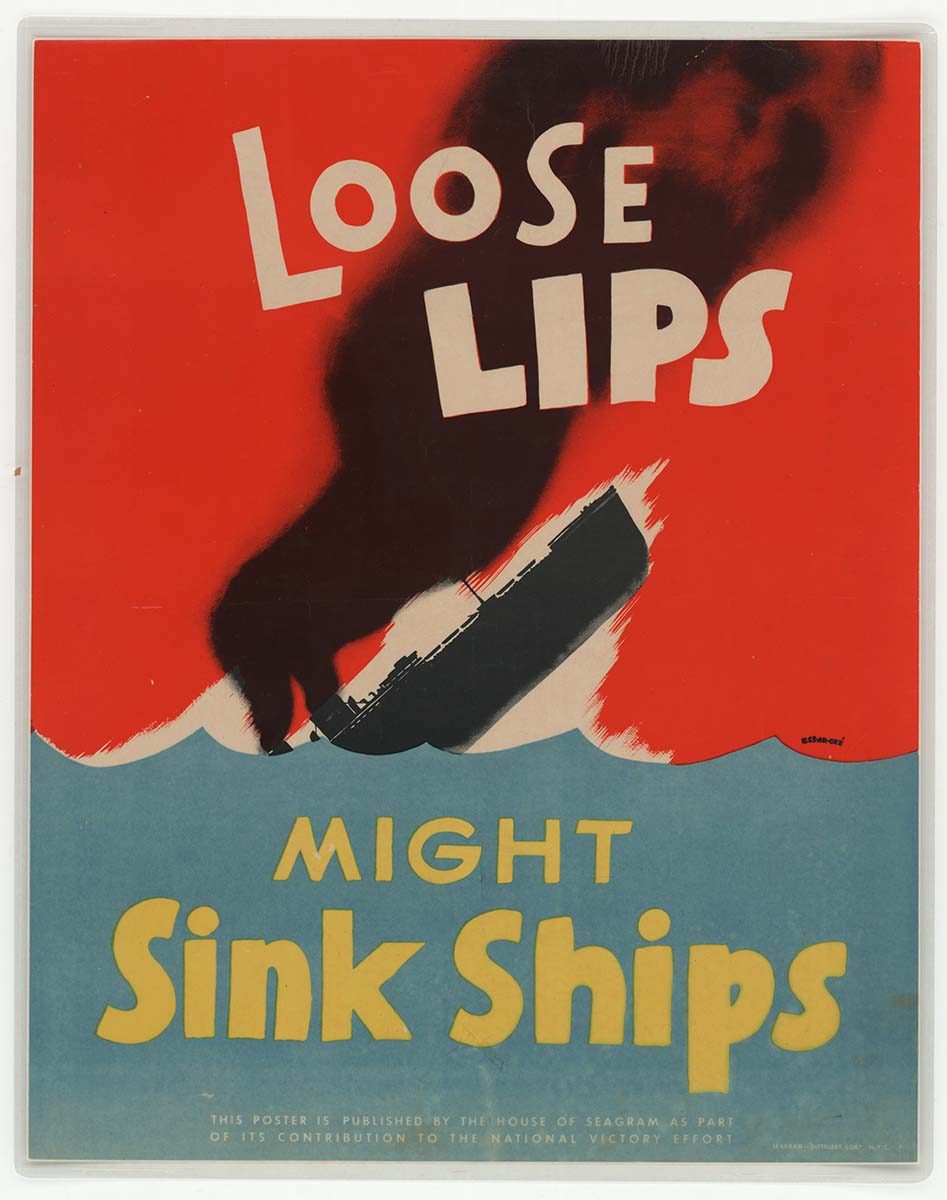
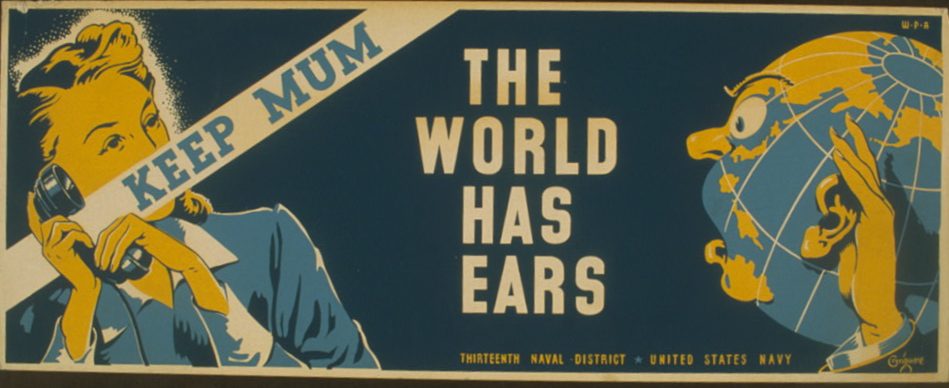
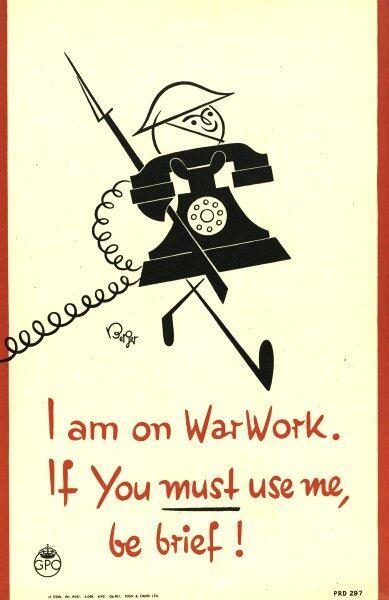
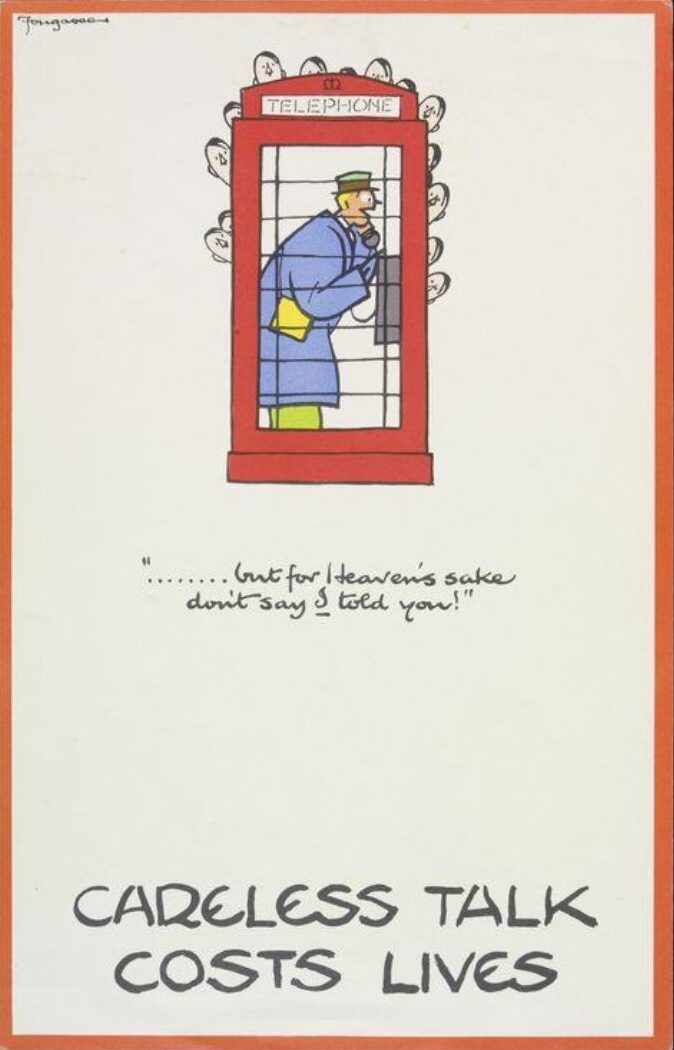
Wartime posters warned against careless talk.
The lavatory
There is an historical anecdote that Winston Churchill had a secure telephone line installed in the War Office, and that it was disguised as a lavatory. The unusual venue for this telephone was designed to prevent eavesdroppers!
The unique set-up was intended to provide Churchill with a private and secure location for telephone conversations, even within the already secure confines of the War Office.
The details of this specific arrangement, including the exact location of this secret, secure toilet within the War Office and the level of disguise that was involved, are not extensively documented in publicly available records.
However, the anecdote suggests that the telephone line was concealed or placed in what appeared to be a lavatory cubicle, to provide Churchill with an additional layer of privacy and security during his communications.
This unconventional practice was in line with Churchill's commitment to maintaining secure and confidential communications, especially during a time of war. Such measures were taken to ensure that Churchill could have very private conversations without the risk of being overheard, which was paramount at this time.
While the specifics of a “lavatory-disguised hotline” may not be fully detailed in historical records, it remains an interesting aspect of Churchill's focus on secure communication during WW2.
What the hotline was for
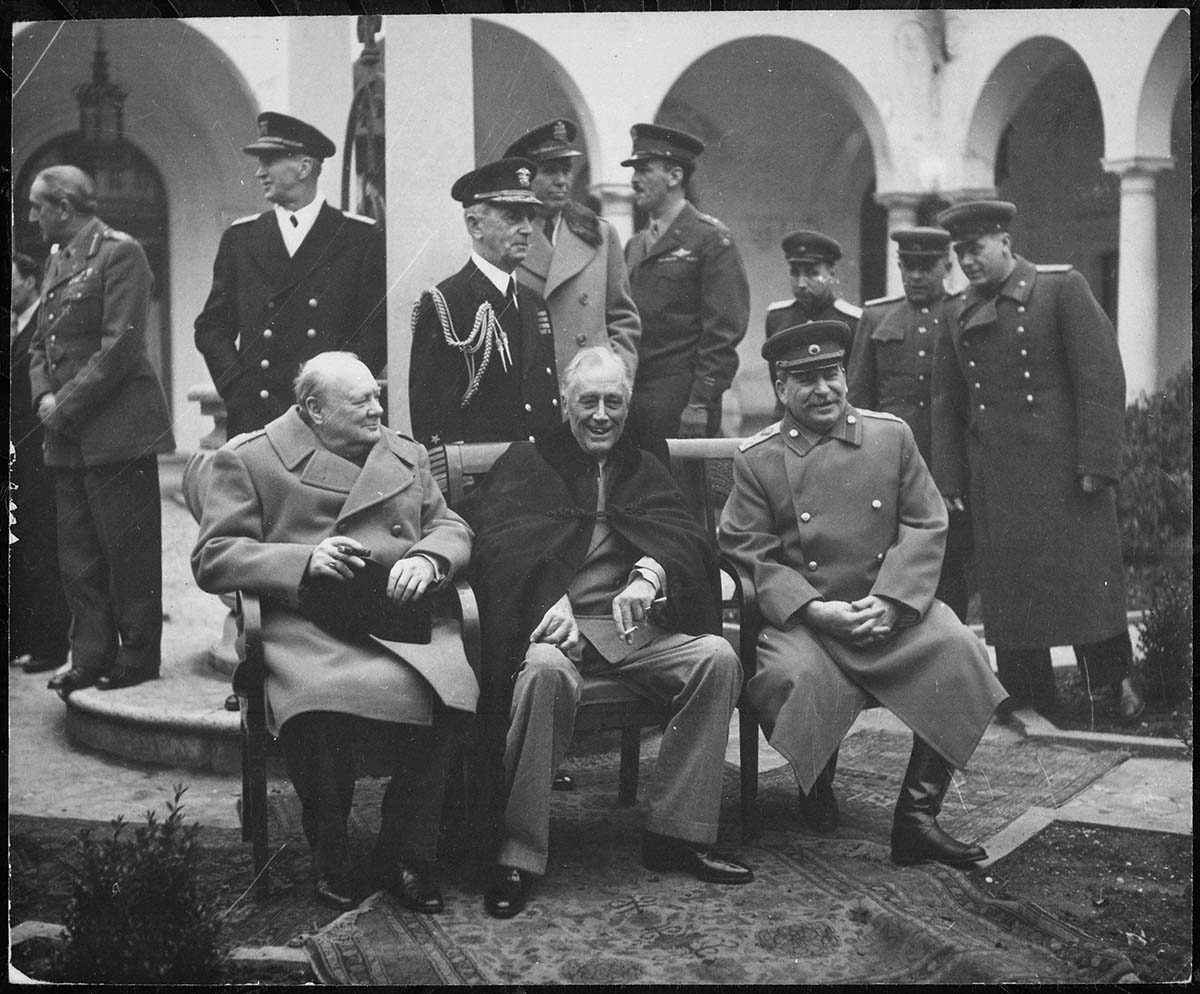
This War Office hotline was a crucial tool for coordinating military actions and strategies among the Allied Powers. Churchill could communicate directly with other military leaders to discuss plans, share intelligence and make decisions related to the ongoing war effort. This secret hotline facilitated confidential diplomatic discussions between Churchill and other heads of state. It allowed for negotiations, treaty discussions, and the handling of political matters that were crucial to maintaining the unity of the Allied forces.
In times of crisis or urgent situations the hotline provided a direct and immediate means of communication. Churchill could use the hotline to address emerging crises, make quick decisions and respond promptly to rapidly changing situations. The hotline was instrumental in strategic decision making: Churchill could engage in discussions about overall war strategy, resource allocation, and other critical decisions that required swift communication. The hotline helped foster and maintain unity among the Allies. Direct communication between leaders reinforced their commitment to the common cause of defeating the Axis powers, and it also addressed any concerns or disagreements promptly.
Scramblers
How was a high level of security maintained in any covert hotline? At the start of WW2 the US military relied on Western Electric's A-3 voice scrambler for sensitive communications. Voice scramblers were used by both sides during the war, and the A-3 system had been used on transatlantic calls, although it was known that they were by no means safe, as each side had broken and intercepted the other side's communications very easily.
The A-3 system worked by splitting the speech signal into five frequency bands, and then each band could either be transmitted plain or inverted. However, it was very easy for this scrambling to be broken; the principle had been in use since the 1920s and was well known.
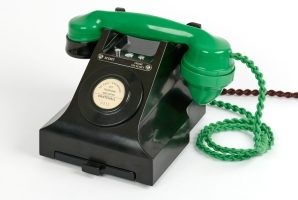
There was also a UK variant of this, no doubt used in the War Office, developed by the GPO at Dollis Hill. It was often referred to as the ‘Scrambler Phone’ and known to the UK military as ‘Privacy Equipment No. 1’. All phones connected to the system were fitted with a green handset for identification.
Whilst this prevented casual eavesdropping, anyone with technical knowledge could easily break it.
The risk of a leak in “Churchill's lavatory” was very real, and could jeopardise the whole of the war effort.
Indeed, it is believed that a conversation between Roosevelt and Churchill in early 1943, which was using the A-3 system, was intercepted and unscrambled by the Germans, revealing critical details.
So it was obvious something more secure was needed. How, then, were they to fix the leak?