 Login »
In the early 1890s, a Kansas City undertaker called Almon Strowger suspected he was losing trade because of the telephone system — either through bribery or family connections, his rivals were getting his calls, and his business. With the help of a relative with engineering skills, he devised an automatic switch capable of connecting an incoming line to one of several outgoing lines, based on selections made by the caller.
Others had tried earlier — two inventors from Washington DC had even patented a similar system back in 1879, just three years after the invention of the telephone — but Strowger's "selector," so called because it selected the appropriate outgoing line, was the first practical system put to real-world use. Telephones had always used two wires for the line; Strowger's early selector needed five, but the principle of switching was sound, and the patent, granted on 10th March 1891, would form the basis of telephone switching for the next 100 years. With refinement, the selector was made to operate using the existing two wires between phone and exchange.
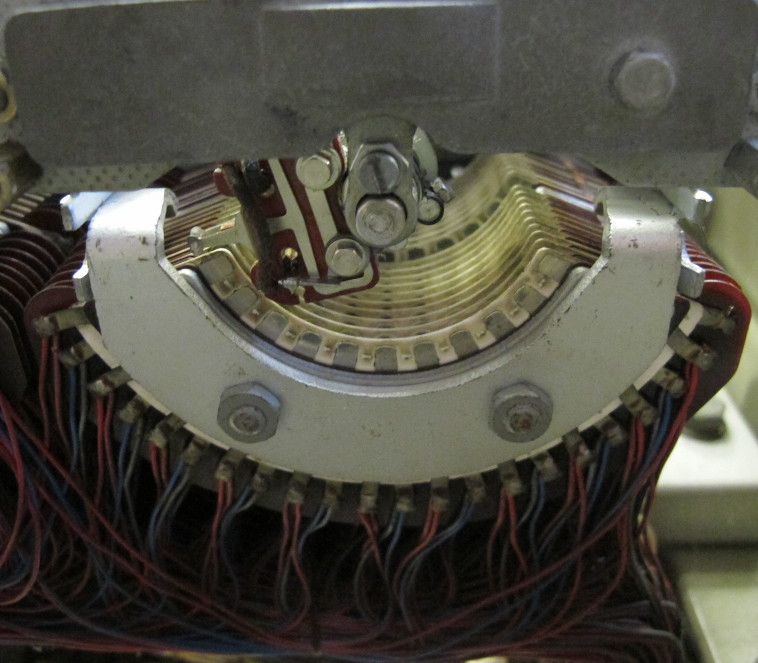
With a rotary dial fitted to the phone, containing digits 0–9, the phone could instruct the selector in the exchange which of ten lines was required, by sending 1 to 10 pulses down the line (10 pulses representing a 0). Using an electromagnet and a ratchet mechanism, a moving arm in the selector — called a wiper, carrying the incoming line — could be made to connect to any one of ten outgoing lines arranged in a semi-circle.