Login »
A journey through 150 years of the telephone in Britain, told through the museum's own collection — from the wooden box Alexander Graham Bell used to prove speech could travel down a wire, to the handset that put the internet in your pocket.
On 10th March 1876, Alexander Graham Bell made the first successful telephone call, saying to his assistant Thomas Watson: "Mr. Watson, come here, I want to see you." Bell was born in Edinburgh in 1847; his mother's and wife's deafness profoundly shaped his interest in speech and hearing.
2026 marks 150 years since that call. This exhibition traces every step from it — through the Bakelite classics of the mid-century GPO, the design experiments of the 1960s and 70s, the arrival of the mobile, and on to the smartphone.
The exhibition runs the length of a row of display cases set among the shelves at The Hive, Worcester's library — so you can follow 150 years of the telephone while you browse for something to read.
Each case is captioned in full, with a year, a story, and (where we have them) the surprising details — like why Bell's telephone only needed one wire, or how a 1966 trial phone reached the desk of a Colgate-Palmolive chairman before it reached the public.
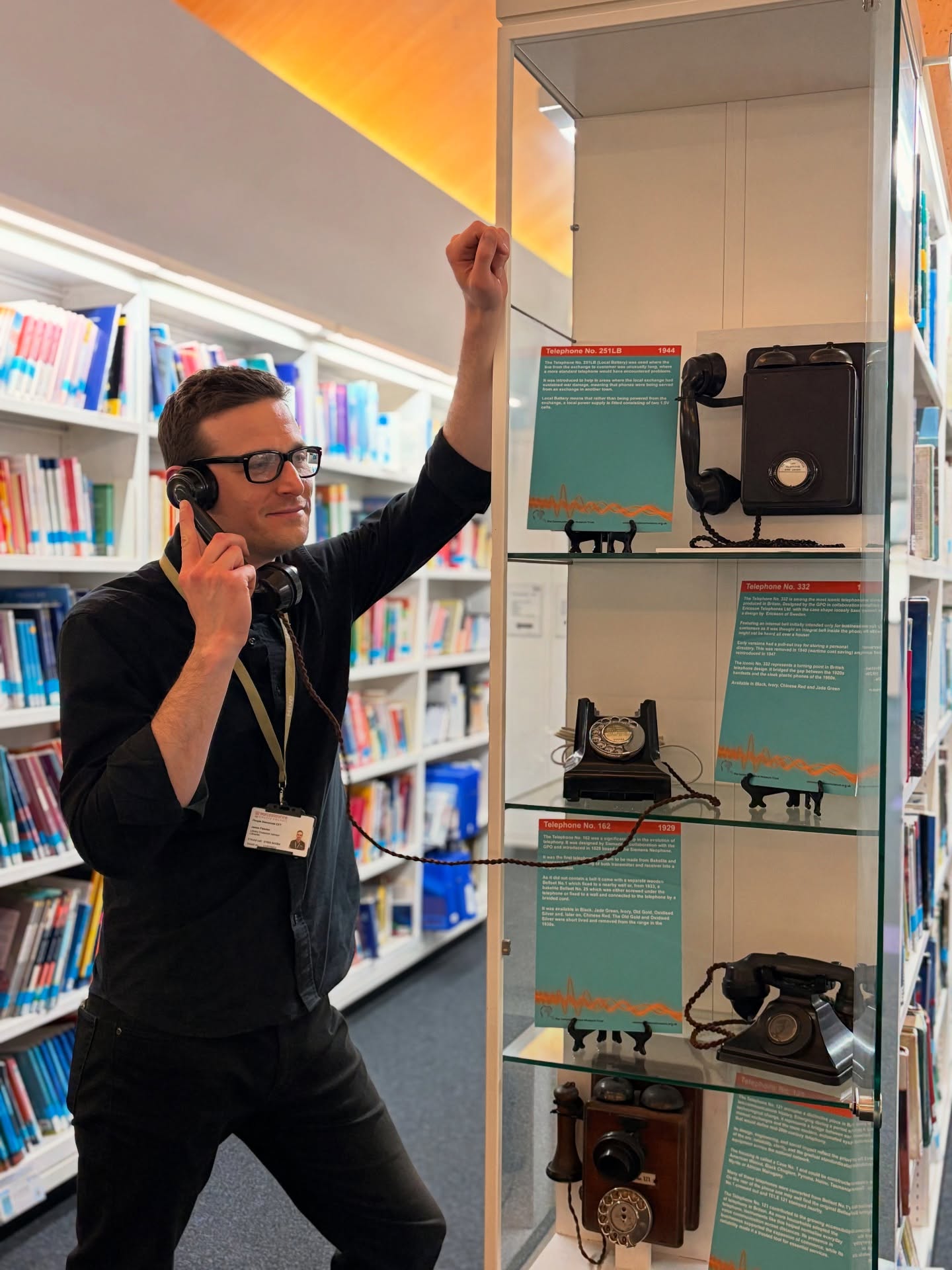
A small selection from the full run of cases — the complete exhibition covers every decade in between.
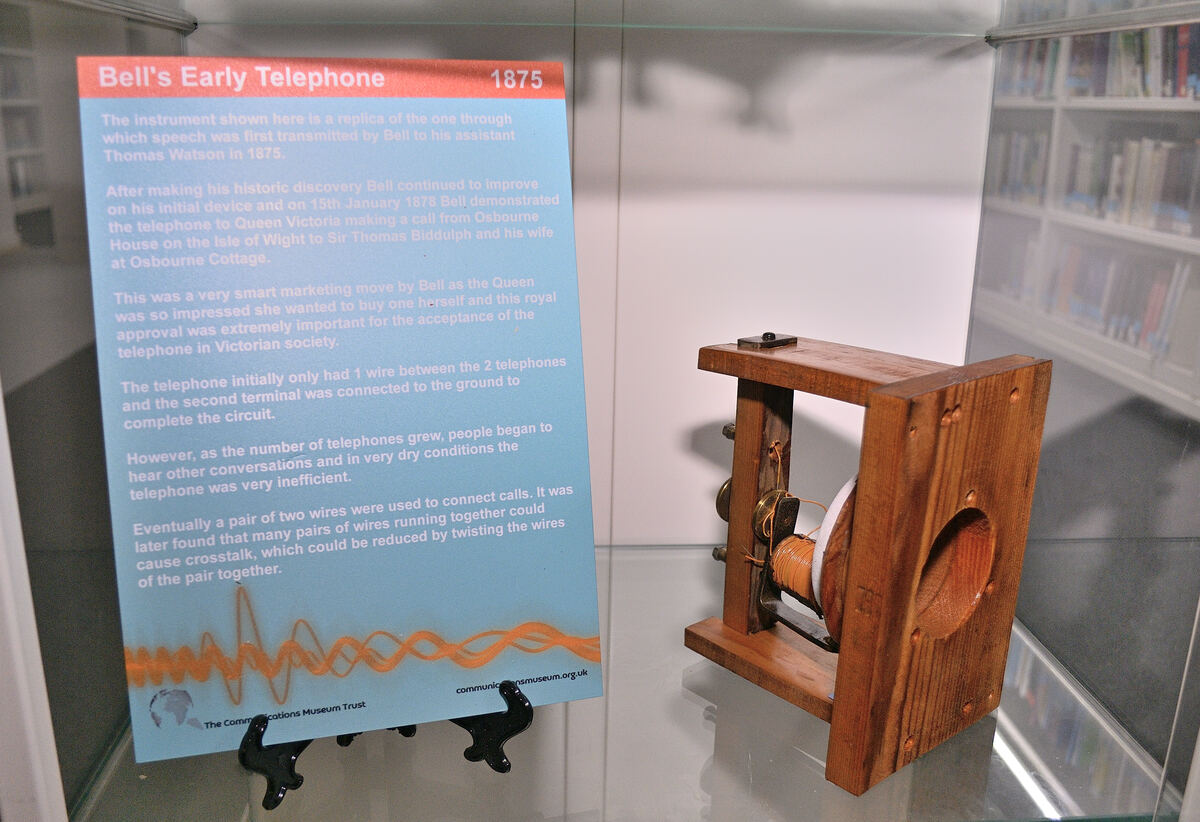
A replica of the instrument through which Bell first transmitted speech to his assistant Thomas Watson. It ran on a single wire, with the circuit completed through the ground — workable until enough telephones existed for conversations to start bleeding into each other.
The first British phone to combine transmitter and receiver in one handset, based on the Siemens Neophone and made from Bakelite. Available in black, jade green, ivory, old gold or oxidised silver — though the last two didn't last the decade.
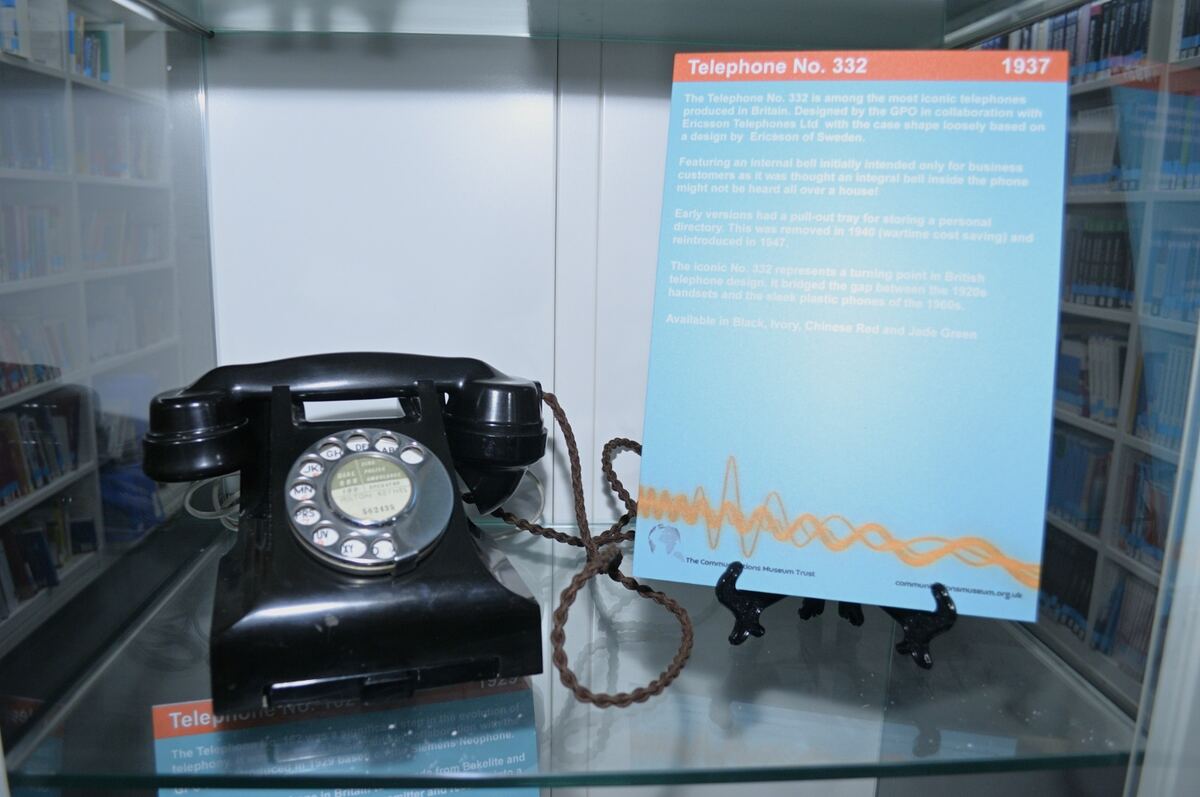
Among the most recognisable phones Britain ever produced, developed with Ericsson. Its internal bell was originally for business customers only — the GPO doubted a bell built into the phone could be heard around an entire house.
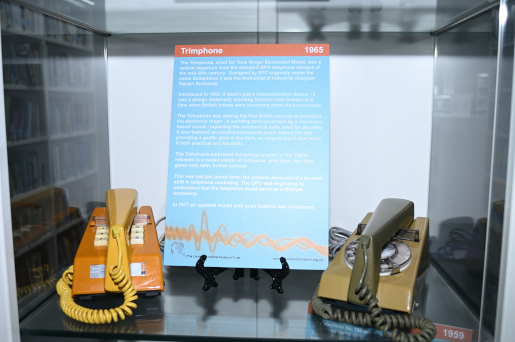
Short for Tone Ringer Illuminated Model. Designed by industrial designer Martyn Rowlands under the working name Deltaphone, it swapped the mechanical bell for an electronic warble and lit its dial softly in the dark — released in turquoise, grey-blue and two-tone green as the telephone became a style statement.
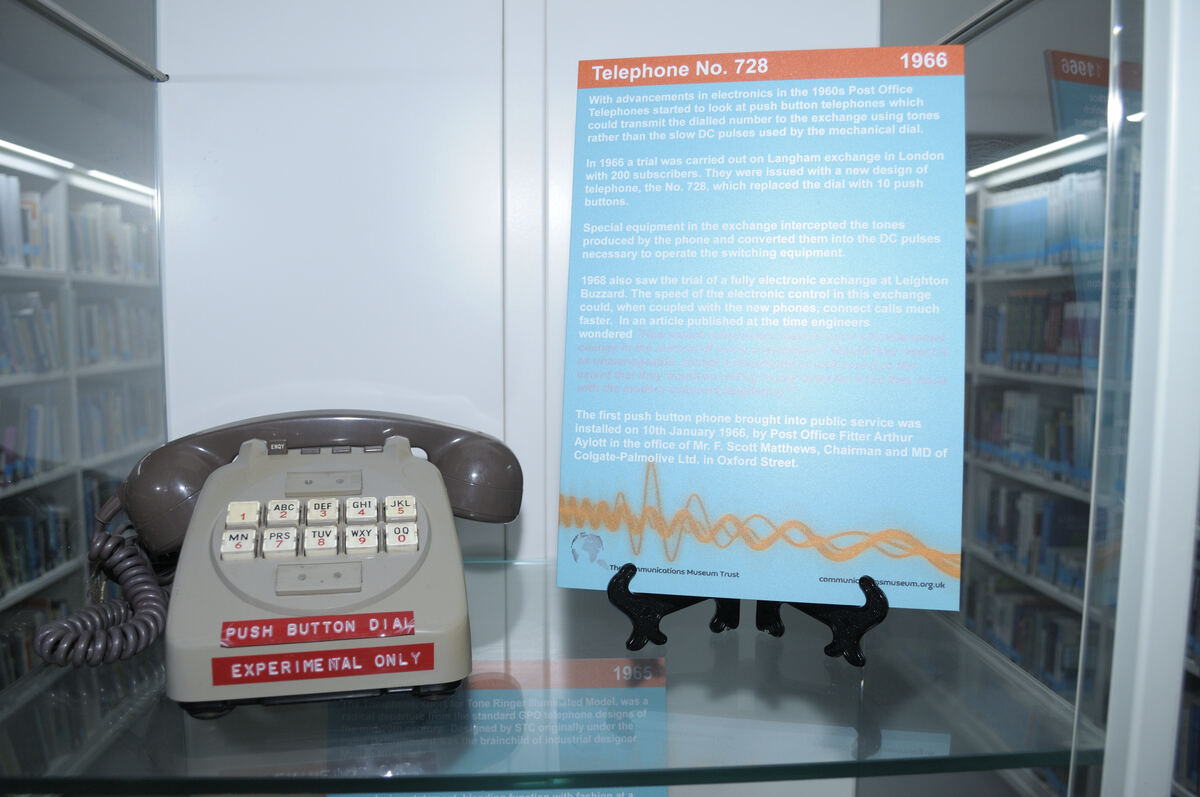
A push-button trial phone tested on 200 subscribers at Langham exchange, London, converting tones back into the pulses mechanical exchanges understood. The first one in public service went in on 10th January 1966, on the desk of a Colgate-Palmolive chairman on Oxford Street.
A limited-edition run for the Queen's Silver Jubilee, in royal blue or burgundy with the Jubilee crest on the dial, mostly given as gifts to dignitaries. A standard version without the crest went on public sale the following year.
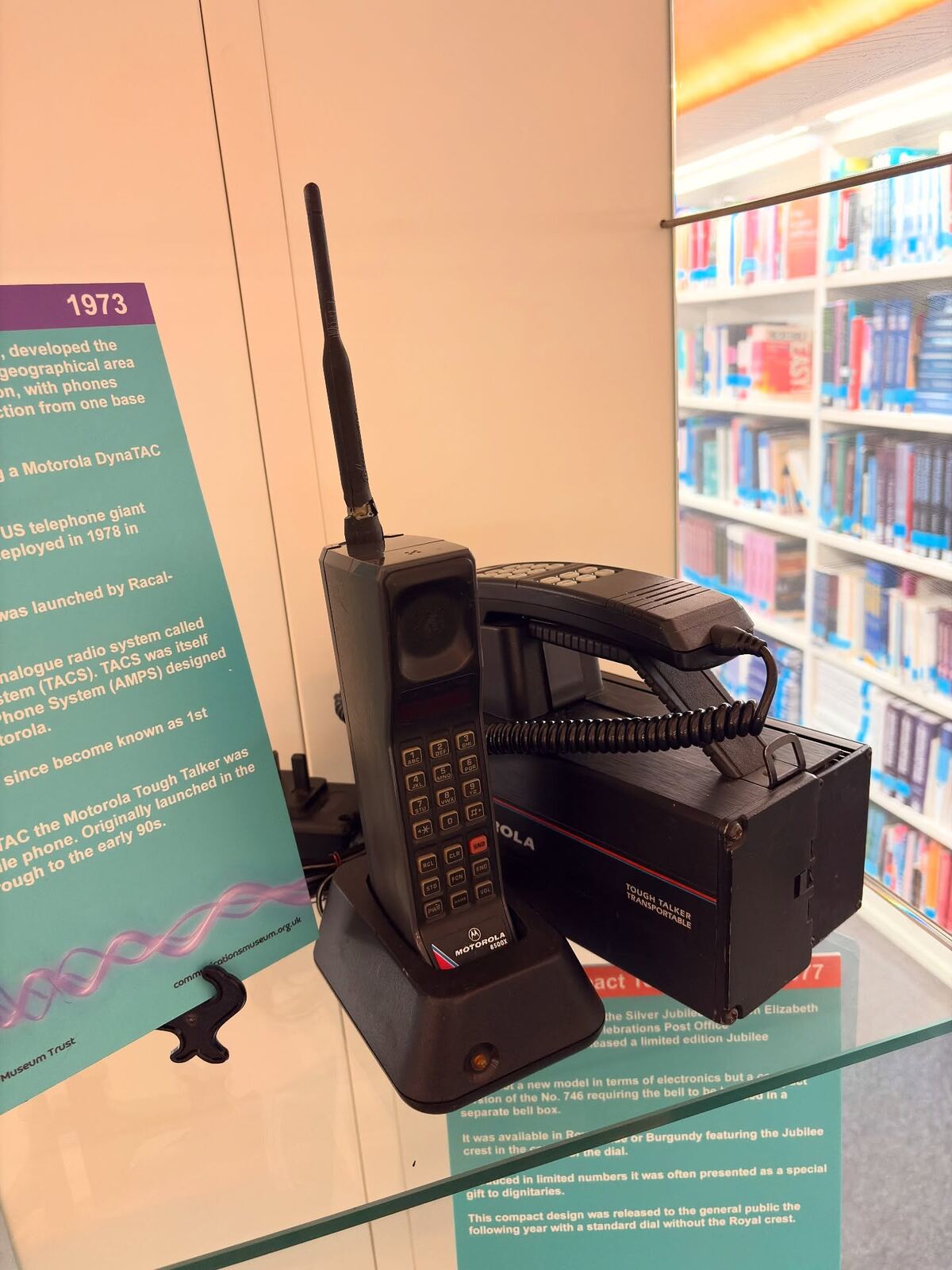
Motorola's cellular concept split coverage into geographic cells with calls handed off between base stations as a phone moved. The UK's first cellular network launched on 1st January 1985 under Racal-Vodafone, using the TACS analogue system.
Launched a year after the original iPhone, with proper 3G data speeds and, crucially, the new App Store launching alongside it — the point the phone stopped being just a phone.
The Hive, Sawmill Walk, The Butts, Worcester WR1 3PD
Free, during normal library opening hours. No booking required.
We're still filling in gaps in the timeline — support helps us research and add to it.