Login »
How one man's vision opened the door to today's communications systems — from operators manually routing calls, to the fibre networks being laid today.
In 1947, while on holiday in Barmouth, Tommy Flowers — already known for building Colossus at Bletchley Park — started thinking about how a computer could be used to route telephone calls. He set up a team at the GPO Research Station at Dollis Hill to chase down ideas that were groundbreaking at the time and are commonplace now.
Under our feet and above our heads, a quiet revolution is happening: a century of copper cable is being replaced by fibre optic. For the first time in over a hundred years, the technology connecting every one of us is being upgraded. Flowers to Fibre tells that story, from the Strowger years through to fibre optics feeding in beyond 2025.
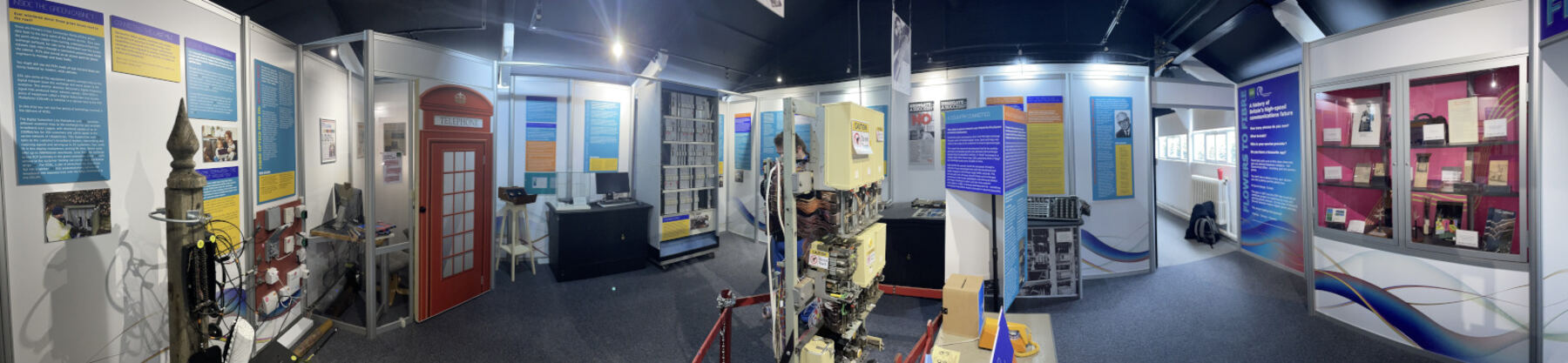
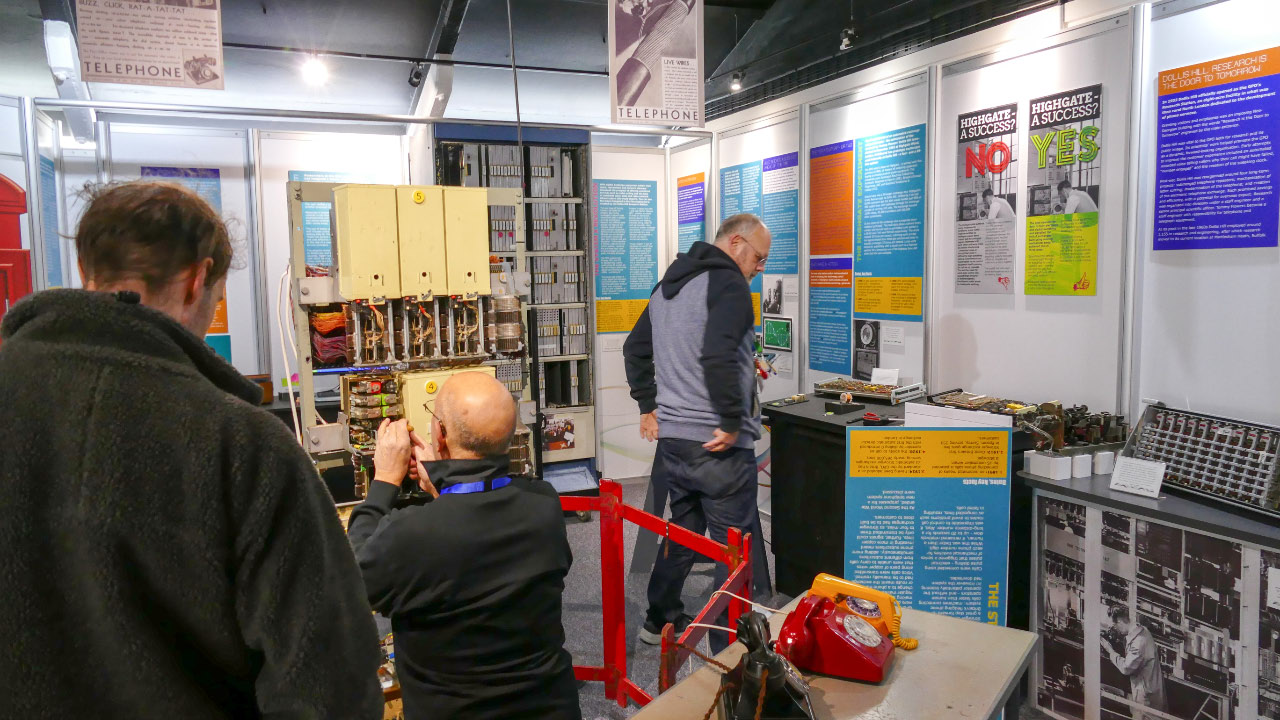
Featuring an interactive, working Strowger telephone exchange, an original System X prototype, and a working dial-up service for PC internet access. There's also an interactive digital quiz, plus STEM activities and competitions for children and schools.
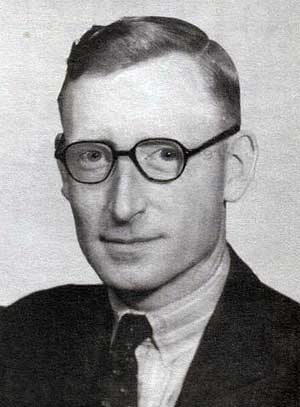
Designer of the Colossus electronic computer, and lead researcher at GPO Telecommunications Research into electronic switching.
A film made by researchers at Dollis Hill in the early 1970s, showing what they envisioned communications would be like by the 1990s.
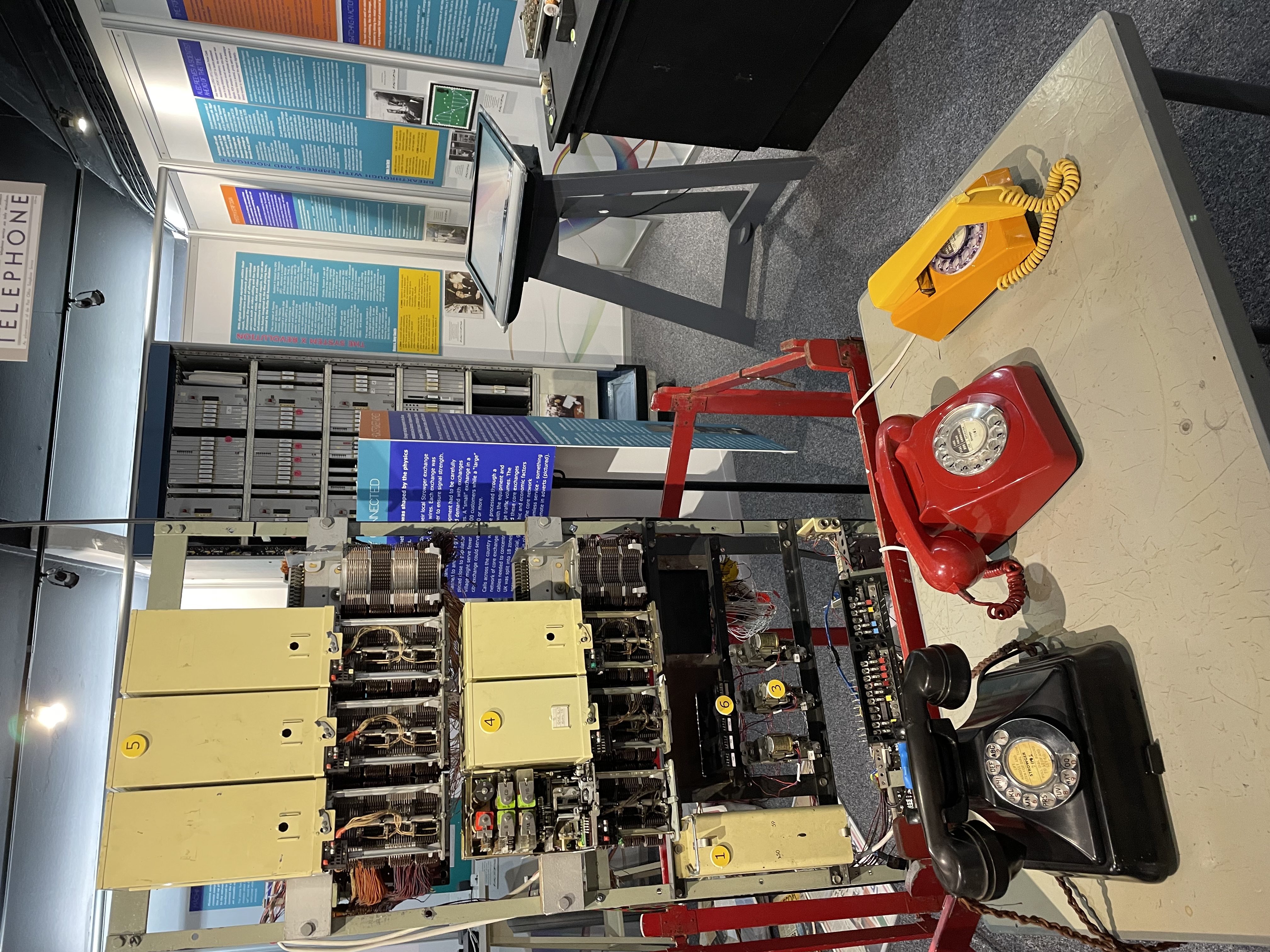
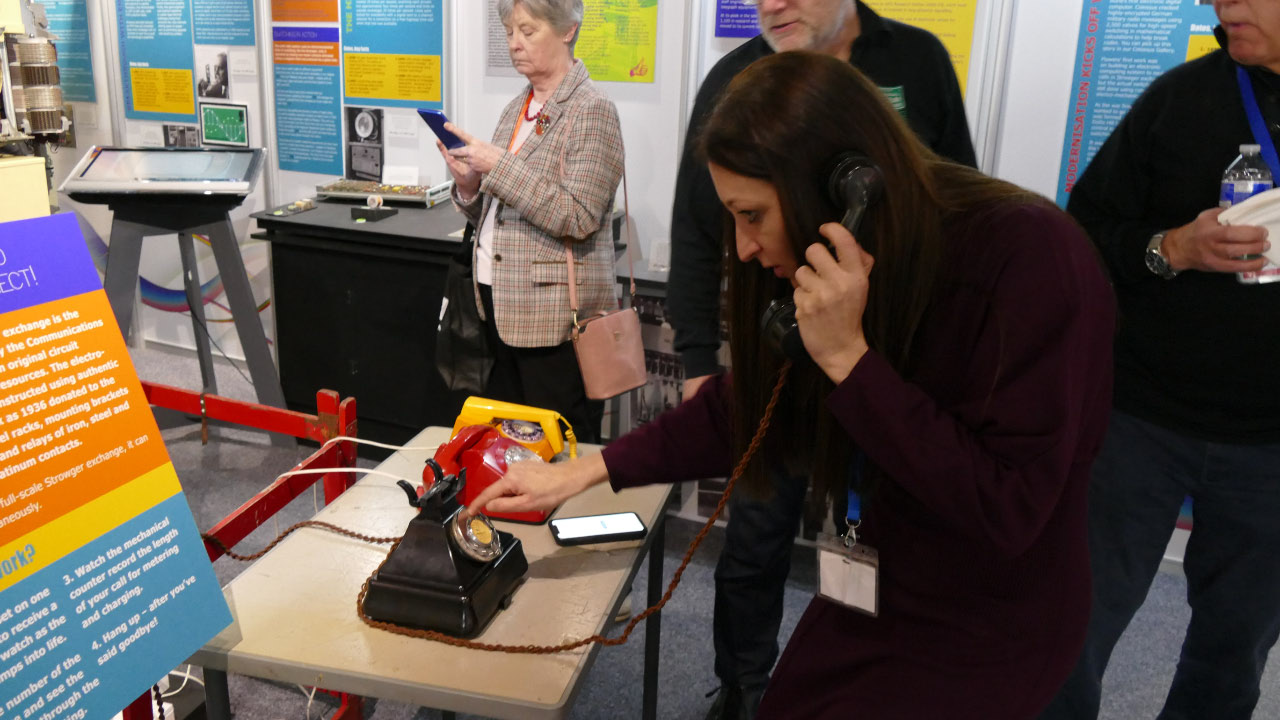
A hands-on exchange demonstration lets visitors dial out on a black Bakelite Strowger-dial phone, a classic red 746, and a 1970s push-button set — each routed through a working rack of real exchange equipment.
A full biography panel traces Flowers from his 1905 birth in Poplar and 1921 apprenticeship at Woolwich Arsenal, through his 1930 transfer to the GPO's Dollis Hill research station, his 1943 work on Colossus at Bletchley Park, and his 1947 return to lead the GPO's digital exchange research.
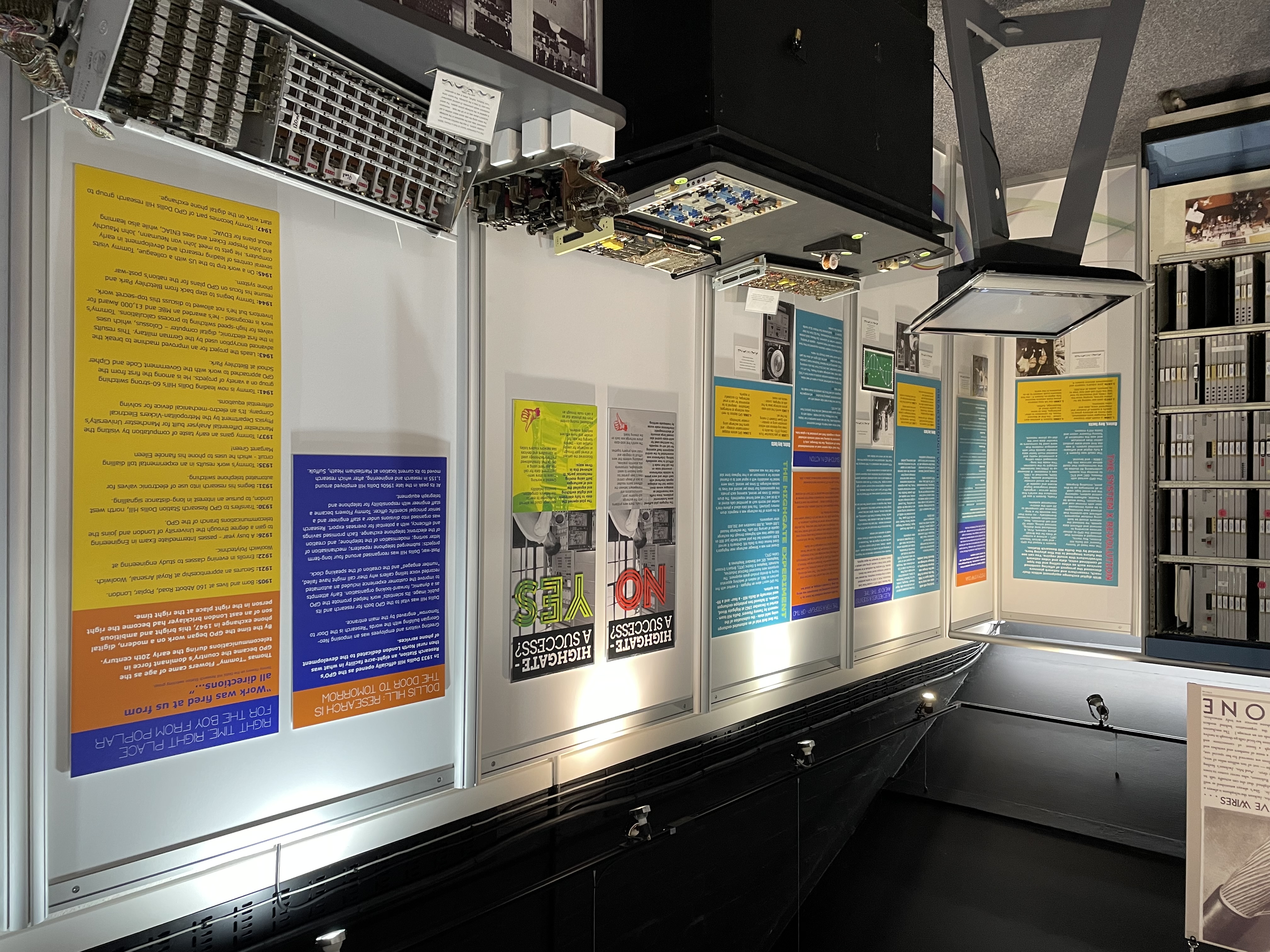
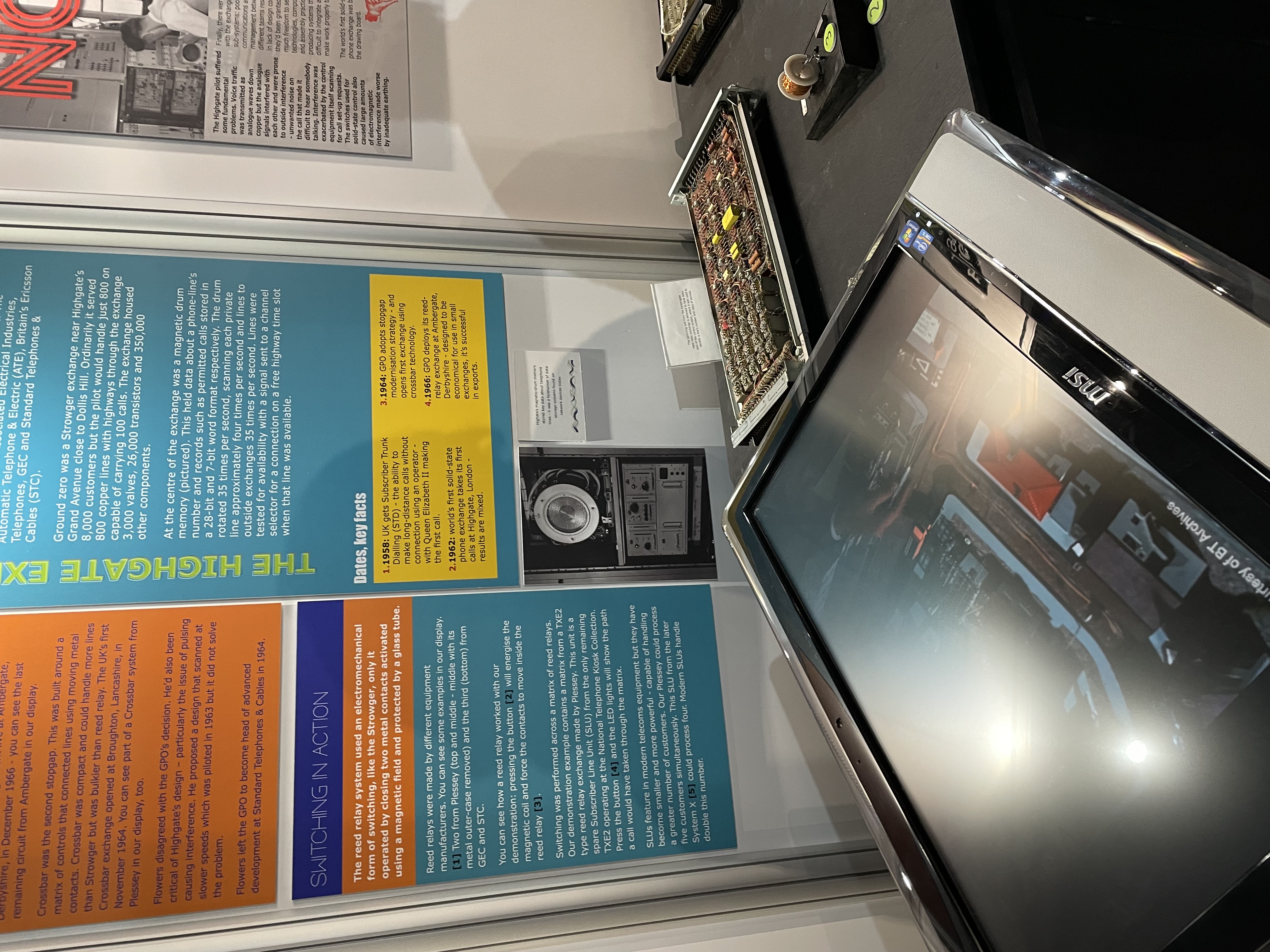
In 1962 the world's first solid-state phone exchange took its first calls at Highgate, London — a converted Strowger exchange housing 3,000 valves, 26,000 transistors and 350,000 other components, with results engineers themselves described as mixed.
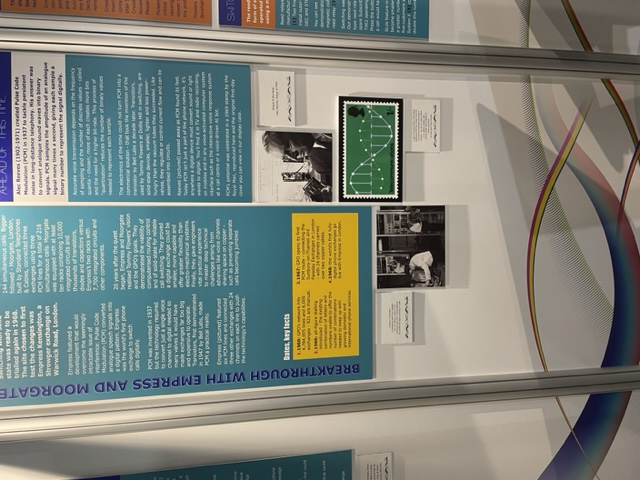
In 1968 the Empress exchange in Kensington became the world's first phone exchange to switch calls digitally, using Pulse Code Modulation — a technique invented decades earlier by Alec Reeves but only made practical once transistors replaced valves.
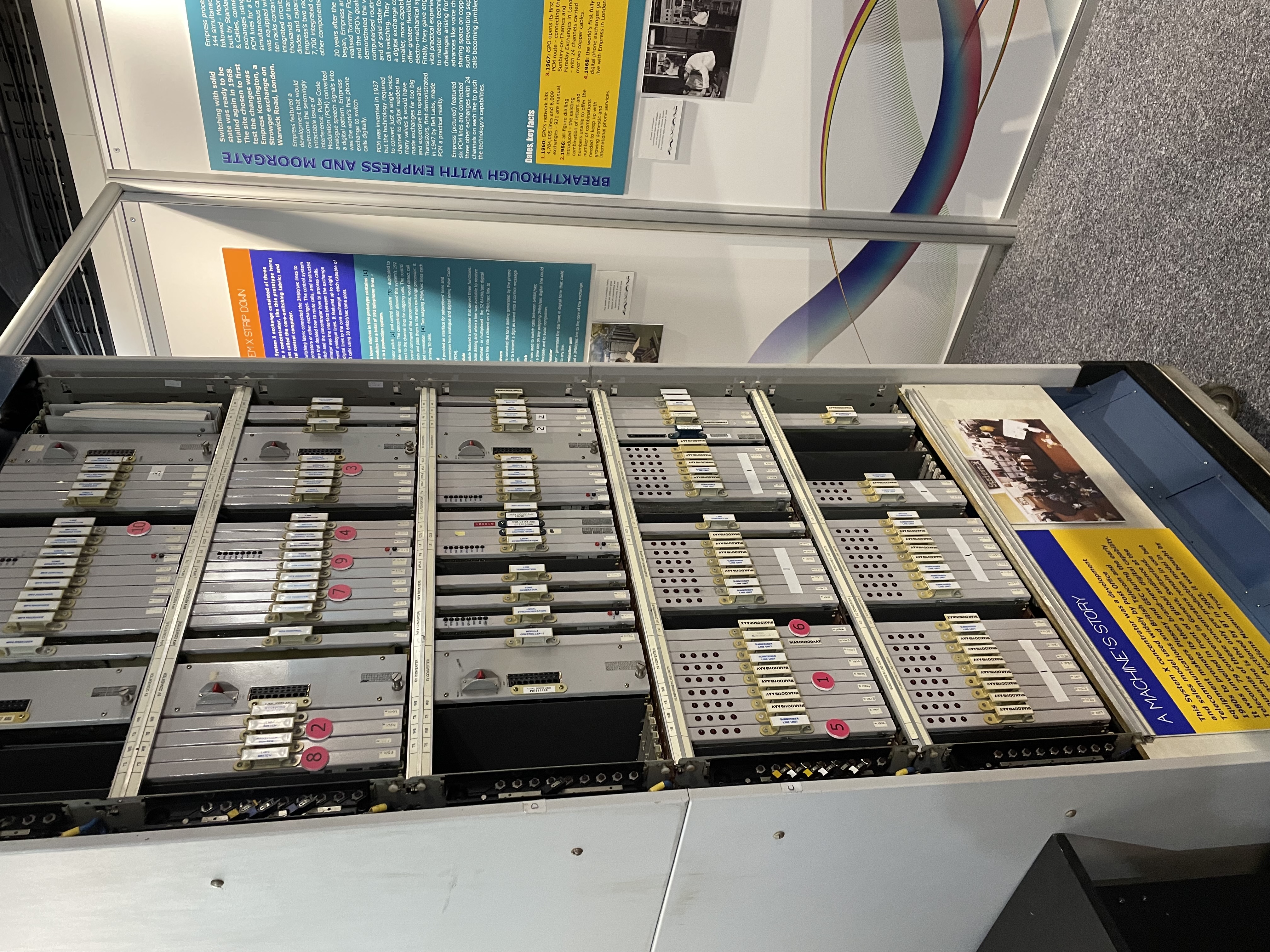
A rare surviving prototype concentrator from System X, the digital switching system that became Britain's standard exchange technology through the 1980s and 90s, sold by Plessey, GEC and Telecom.
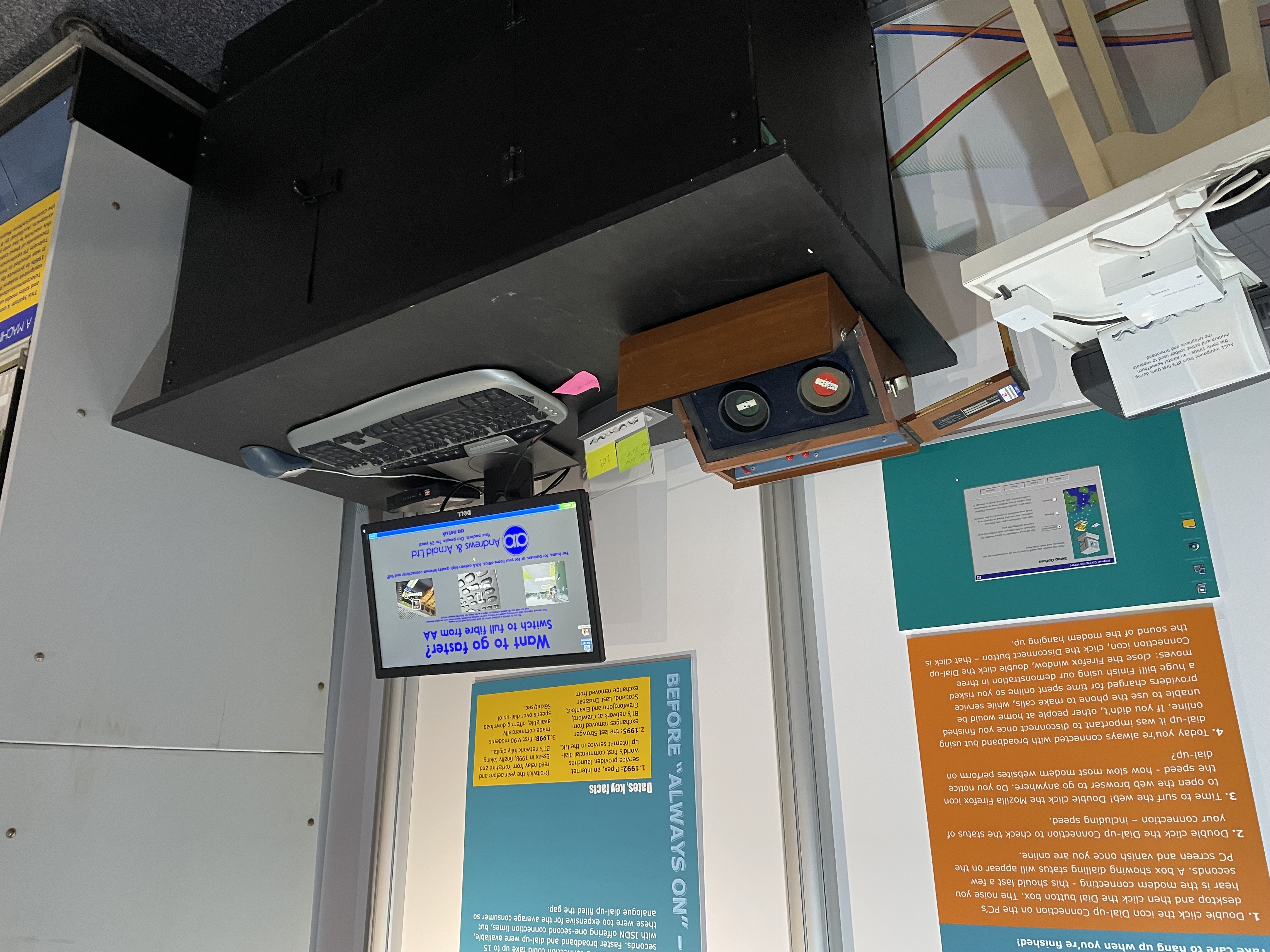
A working 1990s PC and modem lets visitors dial up and browse the early web at authentic dial-up speed — and hang up properly afterwards, the way everyone had to before "always on" broadband existed.
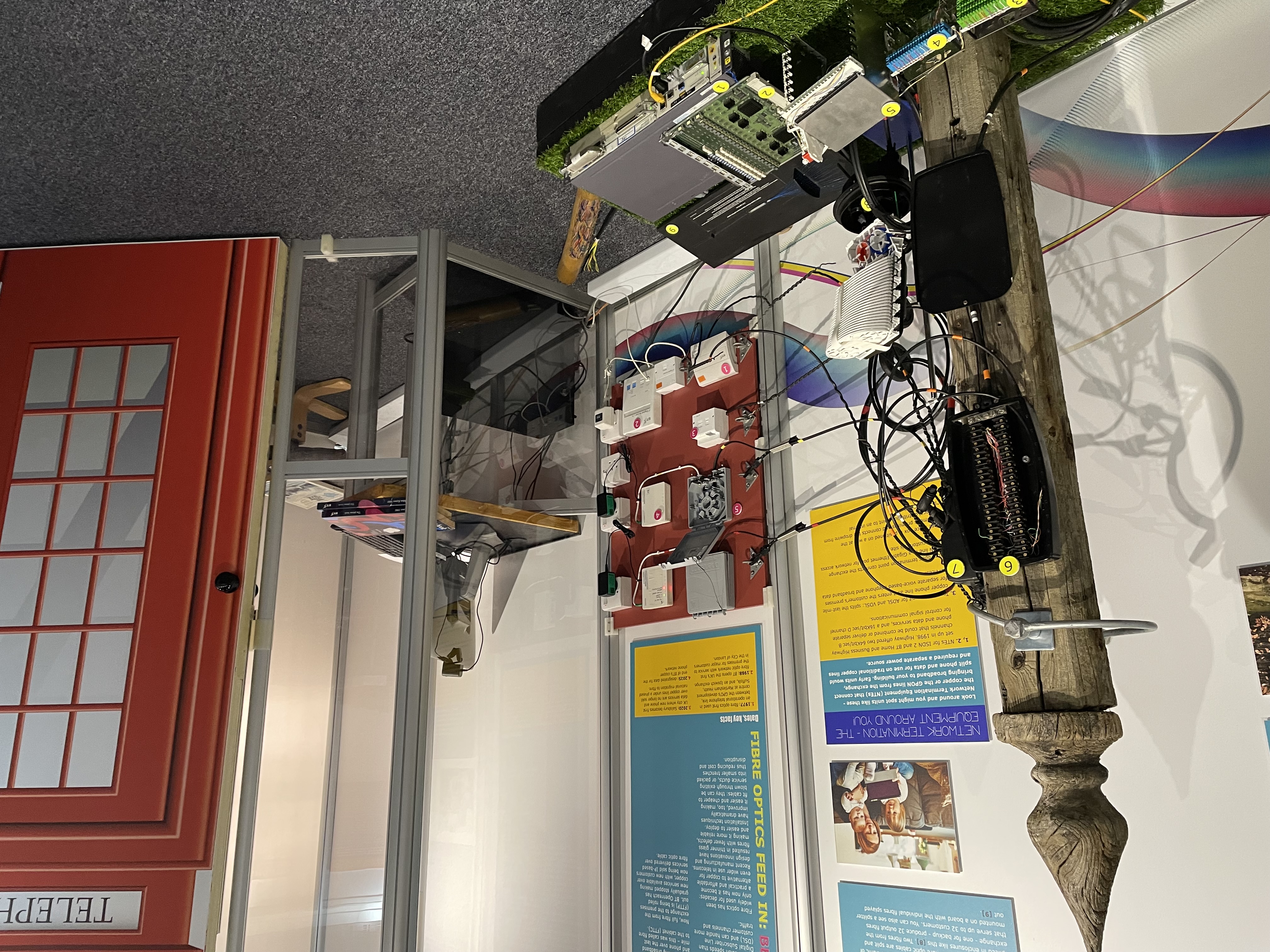
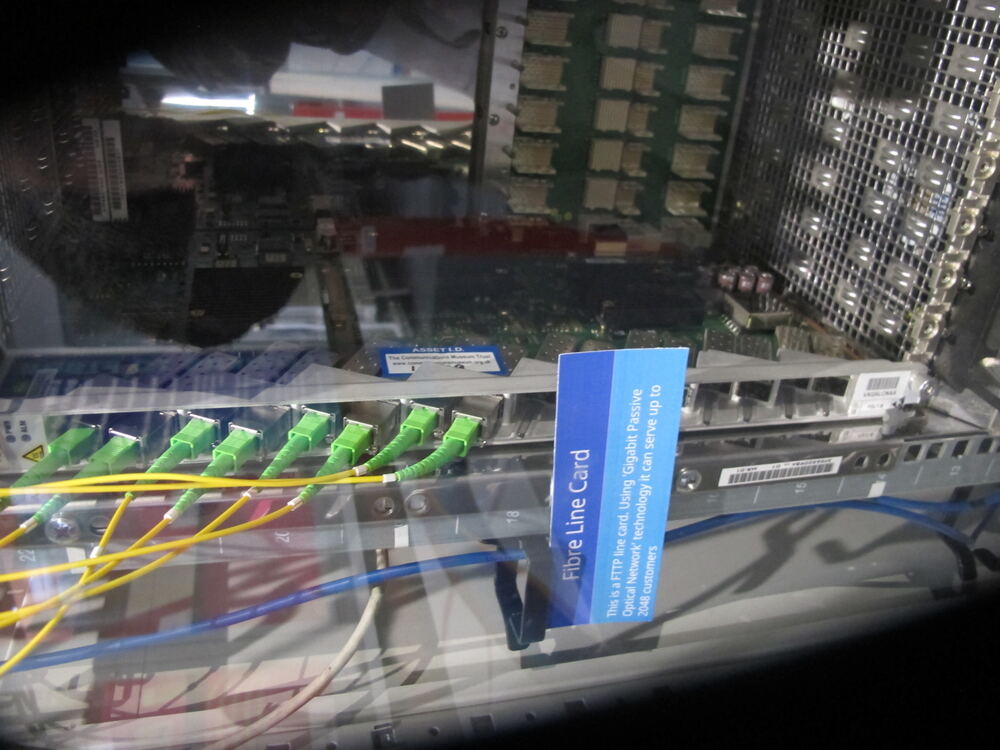
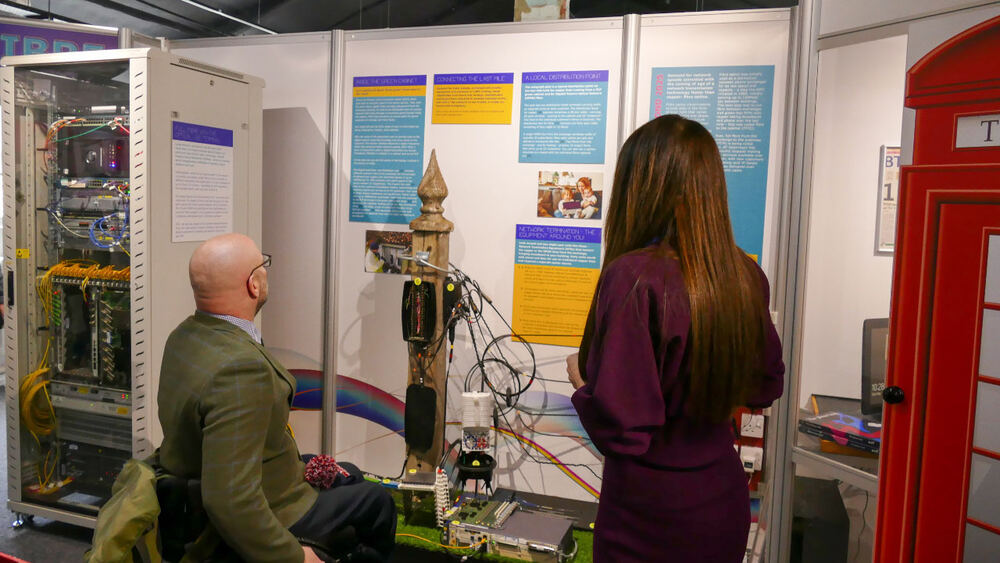
A recreated telegraph pole and green street cabinet show exactly how fibre gets from the exchange to your door today — right down to the network termination equipment that would be fixed to a real building. A single fibre line card, using Gigabit Passive Optical Network technology, can serve up to 2,048 customers.

Andrews & Arnold — for home, business, or home office, A&A delivers high quality internet connectivity and VoIP. They aim for low latency and no "evening slowdown" through their own network capacity and monitoring, with UK-based staff who know the subject rather than read from a script.
Block H, The National Museum of Computing, Bletchley Park, Milton Keynes MK3 6EB
CMT Members get admission discount,show your membership card at the door.
Exhibitions like this run on volunteer time and support from people who care about it.